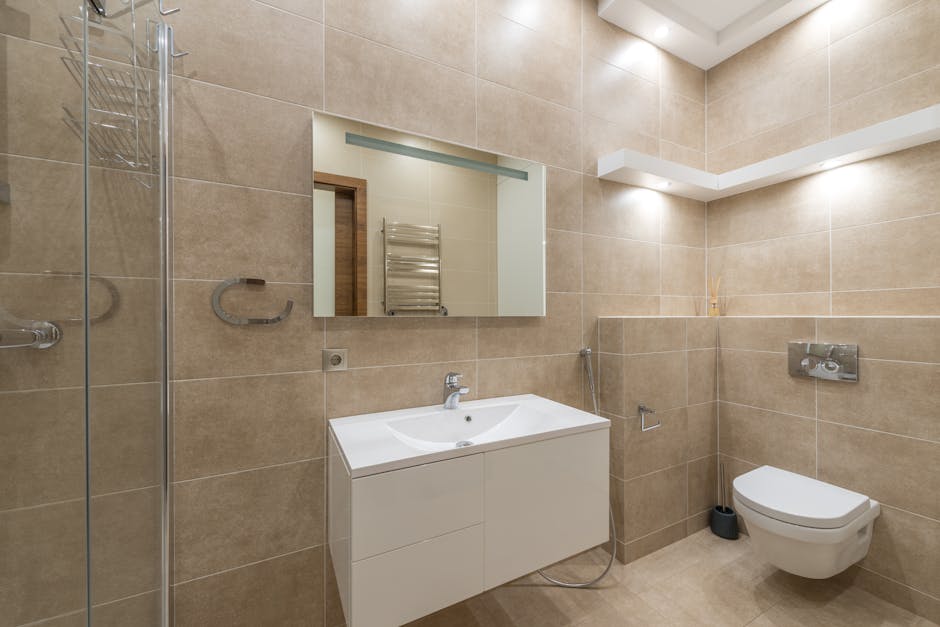
What counts as large-format
Anything with a side longer than 15 inches. In practice, that is 12x24, 24x24, 24x48, and slab panels at 48x96 or larger. Each step up demands flatter substrate and more careful install.
The benefits
Fewer grout lines. A more modern, calm visual. Easier maintenance because there is less grout to clean. Slab-look porcelain can mimic marble or stone with the durability of porcelain. In smaller bathrooms, the right large-format layout can actually make the space feel bigger.
The downsides
Unforgiving on uneven substrate. Heavy and harder to handle. Cuts are more critical because each tile covers more area. Lippage (one edge slightly higher than the next) is more visible on a 24x48 than a 4x4.
What proper substrate prep looks like
A long straightedge to check flatness. Self-leveling underlayment when needed. Uncoupling membrane on plywood. The tile sets in a high-quality medium-bed mortar back-buttered to ensure full coverage. None of this is optional.
Best uses on Long Island
Primary bathrooms. Shower walls in custom showers. Open kitchen and entry floors. Fireplace surrounds where a slab look is the design. We use it often because it looks great when done right — and we plan the prep so it gets done right.
Related services
- Large-Format Tile Installation — Slab-look and large-format porcelain installed with very flat substrate and proper back-buttering.
- Porcelain Tile Installation — Durable, water-resistant porcelain tile for floors, walls, showers, and kitchens.
- Floor Tile Installation — Porcelain, ceramic, and stone floor tile installed with proper leveling and membrane prep.
- Subfloor Prep and Leveling — Leveling, uncoupling, crack isolation, and cement board so tile actually lasts.
- Custom Tile Showers — Walk-in and curbed tile showers built to your space, with niches, benches, and feature walls.
Service areas
This article is most useful for homeowners in: