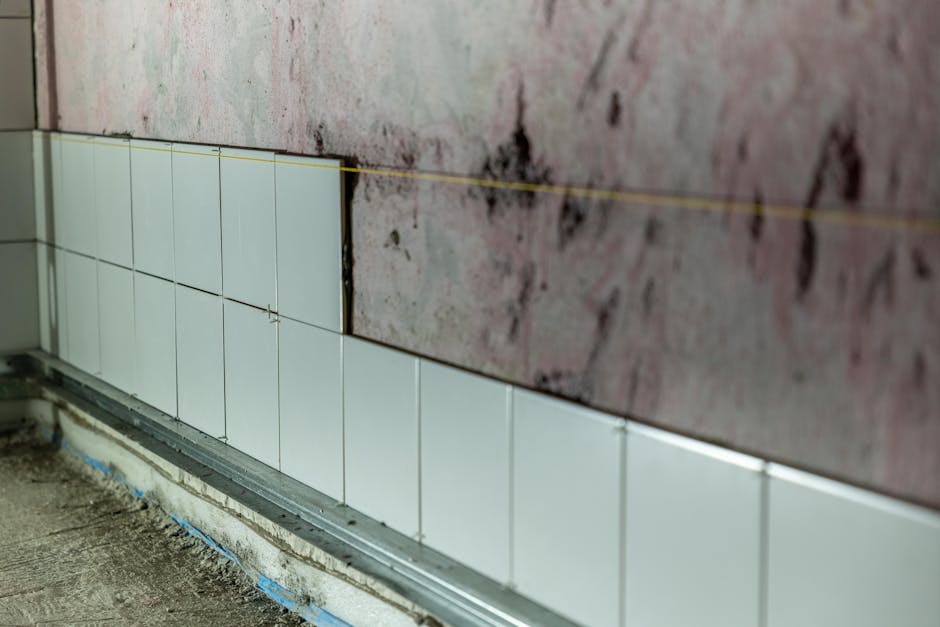
Cracked or missing grout in corners
Cracked grout in inside corners is usually a sign that grout was used where silicone belongs. The two planes move slightly with normal use, and grout cracks. The fix is removing the grout and installing color-matched silicone — but only after checking that water has not been getting through.
Loose or “clicking” tile
If you press a wall tile and feel give, or you hear a hollow sound when you tap it, the thinset has failed in that area. Loose tile in a wet wall is a sign water is or will be getting behind the tile.
Discolored grout that never dries
Darker grout that stays dark hours after the shower is done is holding water. Sometimes that is just porous grout, but sometimes it is water sitting behind the tile and wicking back through.
Soft or stained ceiling below
This is the biggest warning sign. A stain or sag on the ceiling under a second-floor shower means water is getting through the system. Regrouting will not fix this. The wet area needs to be opened up and rebuilt.
Musty smell or peeling paint nearby
Both point to chronic moisture in the wall. Combined with any of the signs above, they confirm that the wet area is no longer sealed.
When the repair is small vs. when it is a rebuild
Cracked grout, a single loose tile, or worn caulk are usually quick fixes. Soft ceilings, multiple loose tiles, and chronic dampness usually mean the membrane behind the tile is gone — and the fix is a rebuild on a real waterproofing system.
Related services
- Tile Repair — Cracked, loose, and hollow-sounding tile repaired with color-matched grout.
- Regrouting — Old, cracked, or stained grout removed and replaced — done the right way.
- Shower Waterproofing — A real waterproofing system behind the tile — not just grout and hope.
- Shower Tile Installation — Custom shower surrounds built on a real waterproofing system — niches, benches, and clean layouts.
Service areas
This article is most useful for homeowners in: